A Driver’s Guide to the 2000HP Lotus Evija
Lotus, the storied British marque synonymous with featherweight chassis and telepathic handling, has just thrown down the gauntlet in the electric hypercar arena. The Lotus Evija is not merely an addition to the growing field of electric exotics; it is a profound statement of intent. This machine reinterprets the core Lotus philosophy of “simplify, then add lightness” for the electric age, delivering a staggering 2,000-horsepower declaration that the future of performance is here, and it is shockingly fast.
A Modern Touch to a Classic Design
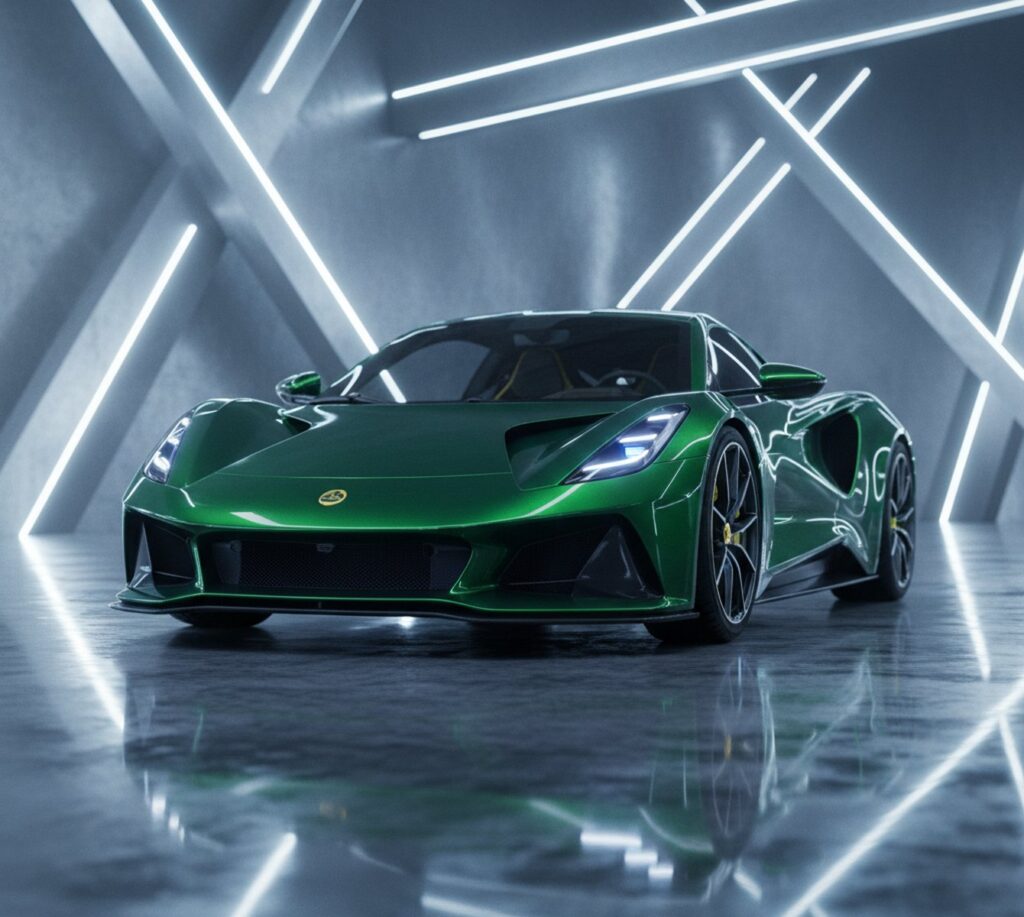
The Evija’s visual drama is an exercise in functional beauty. Crafted entirely from carbon fiber, its bodywork is a masterclass in aerodynamics, shaped by airflow rather than convention. The most defining features are the two massive Venturi tunnels that carve through the rear haunches of the car. These are not just stylistic flourishes; they are integral to generating immense downforce without the need for aggressive, oversized wings, keeping the silhouette pure. Inside, the minimalist, driver-focused cabin features an exposed carbon tub and a floating “ski-slope” center console, creating an environment that feels more like a Le Mans prototype than a road car.
Built for Strength and Performance


At the heart of the Evija lies a powertrain developed in collaboration with Williams Advanced Engineering. Four potent electric motors—one for each wheel—produce a combined target output of over 2,000 PS (1,972 hp) and 1,700 Nm of torque. This monstrous power allows the Evija to surge from 0-62 mph in under three seconds and, more impressively, from 0-186 mph in under nine. The 70 kWh battery pack is centrally mounted behind the seats, optimizing weight distribution and preserving the agile handling dynamics for which Lotus is revered. A full carbon fiber monocoque chassis, weighing a mere 129 kg, provides the rigid foundation for its motorsport-derived suspension.
Comfort Meets Utility
While “utility” is a relative term in the hypercar world, the Evija’s cabin is a testament to purposeful design. The F1-style steering wheel puts all critical controls at the driver’s fingertips, from drive mode selection to the Drag Reduction System (DRS). A single, clear digital screen provides all necessary telemetry without distraction. The dihedral doors open dramatically, facilitating ingress and egress into the deeply sculpted racing seats. This is a cockpit designed for one purpose: to connect the driver to the machine and the road in the most direct way possible.
Why It Stands Out


In a market that includes titans like the Rimac Nevera, the Lotus Evija distinguishes itself through its obsessive focus on dynamics. While rivals chase straight-line speed records, Lotus leverages its seventy-year history of chassis engineering to deliver a car that promises to feel hundreds of kilograms lighter than its 1,680 kg curb weight suggests. For U.S. buyers, the Evija represents a unique proposition: the soul of a classic British sports car powered by the most advanced electric technology on the planet, all wrapped in a design that is nothing short of breathtaking.
Advanced Technology & Innovations
The Evija’s true genius lies in its software and power management. The use of four independent motors enables genuine torque vectoring on a level internal combustion cars can only dream of. The system can instantly adjust power to each wheel, sharpening turn-in, maximizing grip, and delivering unparalleled cornering stability. Furthermore, the Evija is engineered for the future of charging, capable of accepting an 800kW charge, which would replenish the battery to 100% in a theoretical nine minutes. With current 350kW chargers, it can reach an 80% charge in just 18 minutes.

Expert Analysis
The critical challenge for any electric hypercar is managing weight, the traditional enemy of performance. While the Evija is the heaviest car Lotus has ever built, its engineering brilliance is in how it mitigates that mass. By centralizing the battery and employing hyper-intelligent torque vectoring, Lotus aims to create a vehicle that pivots and responds with the immediacy of its lightweight ancestors. This is the tightrope walk that defines the Evija: blending the brutal, instantaneous torque of EV power with the nuanced, delicate handling feel that is the brand’s signature. It’s an attempt to prove that the soul of a driver’s car can, and will, survive electrification.

Final Thoughts
Limited to just 130 units worldwide, the Lotus Evija is more than a halo product; it’s a compass pointing to the brand’s electrifying future. It is an audacious, uncompromising machine that honors its heritage while rocketing toward the horizon. For the select few who will experience it, the Evija offers not just a new benchmark in electric performance, but a defining piece of automotive history, proving that the spirit of Colin Chapman is alive and well in the age of the electron.
Frequently Asked Questions
1. How does the Lotus Evija’s handling compare to traditional gas-powered hypercars?
The Evija leverages its four-motor torque vectoring system to provide an otherworldly level of agility and grip that is difficult for mechanical systems to replicate. While heavier than its internal-combustion counterparts, its extremely low center of gravity and sophisticated chassis tuning are engineered to deliver the classic, responsive “Lotus feel,” aiming to feel more nimble than its weight suggests.
2. Is the Evija practical for daily driving in the U.S.?
As a track-focused hypercar, the Evija is not designed for daily practicality. Its estimated range of around 250 miles (WLTP), minimal storage space, and firm ride make it a vehicle best suited for special occasions, scenic drives, and track days rather than commuting or running errands.
3. What is the charging technology, and is it compatible with U.S. infrastructure?
The Evija uses the Combined Charging System (CCS) standard, which is widely available in the U.S. It is one of the first production cars capable of accepting a 350kW charge, which can provide an 80% charge in approximately 18 minutes. While 350kW chargers are still being rolled out, the network is expanding, making the Evija’s rapid-charging capability increasingly accessible.
4. With a price tag over $2 million, what makes the Evija a compelling purchase over its rivals?
The Evija’s value proposition lies in its unique combination of heritage, design, and focused dynamics. It represents the pinnacle of Lotus engineering, offers a truly unique aerodynamic design with its Venturi tunnels, and its extreme rarity (only 130 units) ensures exclusivity. It appeals to collectors and drivers who value the legacy and handling purity of the Lotus brand as much as raw power figures.
Share this article
Help other drivers discover this story.