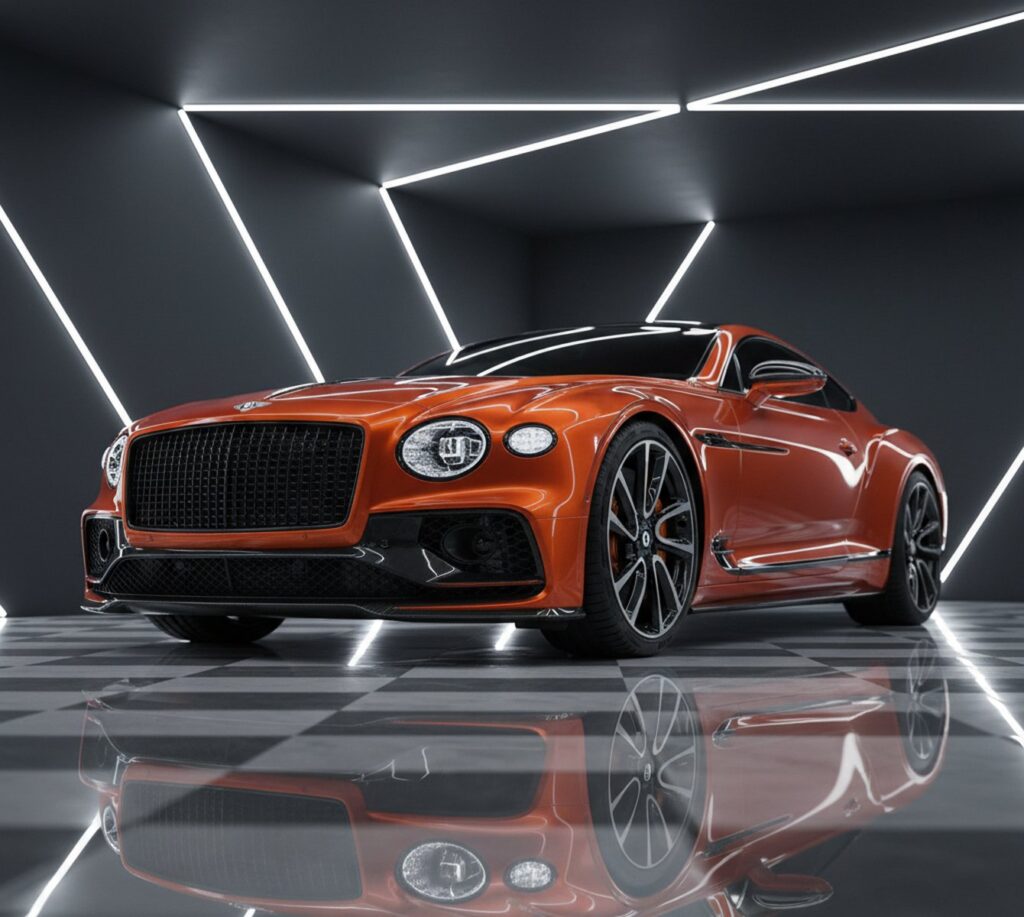
2026 Bentley Mulliner Batur Unveiled: Radical Performance, Next-Generation Design DNA, and The Hidden Truth Behind Its W12 Swan Song
In a move that is both a thunderous farewell and a bold new beginning, Bentley has pulled the silks off the Mulliner Batur. This is not merely another limited-run grand tourer; it’s the most powerful road car in the Crewe firm’s 103-year history and, more importantly, a stylistic prologue to its impending all-electric future. Limited to just 18 examples worldwide, the Batur is a coachbuilt masterpiece that serves as the final, definitive statement for Bentley’s legendary W12 engine.
Penned under the guidance of Director of Design Andreas Mindt, the Batur’s form represents a seismic shift in Bentley’s design language. The familiar twin-round headlamps are gone, replaced by sleek, triple-beam LED units that flank a lower, more assertive grille. The muscular haunches and a fastback-like roofline create what Bentley calls a “resting beast stance,” giving the car an immense sense of power even at a standstill. Crafted from lightweight carbon fiber and sustainable natural fiber composites, the bodywork is a canvas for Mulliner’s limitless customization, from graduated paint fades to hand-painted graphics.
At the heart of this automotive sculpture lies the most potent iteration of Bentley’s iconic 6.0-liter, twin-turbocharged W12 engine ever conceived. Thanks to a new intake system, upgraded turbochargers, and revised intercoolers, output is dialed up to a colossal 740 PS (730 hp) and 1,000 Nm (738 lb-ft) of torque. This immense power is channeled through a refined eight-speed dual-clutch transmission, while the chassis, featuring adaptive three-chamber air suspension, a 48V active anti-roll system, and an electronic limited-slip differential, ensures this power is both usable and supremely controlled.
Inside, the Batur is a sanctuary of bespoke luxury that seamlessly blends heritage with forward-thinking sustainability. While clients can specify virtually any material, Mulliner offers unique options like low-carbon leather sourced from Scotland and carpets made from recycled yarn. The real showstopper is the optional 3D-printed 18-karat gold trim for key driver touchpoints, including the organ-stop vent controls and the drive mode selector. It’s a cabin designed not just for comfort, but as a personal commission of automotive art.


In a market saturated with track-focused hypercars, the Batur carves its own niche. It isn’t built to shatter Nürburgring records but to master the art of the definitive transcontinental journey. For U.S. buyers, its appeal is twofold: it is an instant collector’s item representing the absolute zenith of internal combustion from a storied British marque, and it offers a level of personalization that makes each of the 18 cars a true one-of-one creation, a stark contrast to the series-production supercars it dwarfs in price and exclusivity.
Beyond the headline power figures, the Batur’s chassis technology is where its true genius lies. The 48-volt Bentley Dynamic Ride system can generate up to 959 lb-ft of anti-roll torque in just 0.3 seconds, effectively decoupling the wheels for cruising comfort while instantly stiffening the car for aggressive cornering. Combined with torque vectoring by brake and rear-wheel steering, the system makes this substantial GT feel impossibly agile, shrinking around the driver in a way its dimensions would suggest is impossible.
Our analysis reveals the Batur as more than a limited-edition model; it is a meticulously crafted bridge between two distinct epochs for Bentley. Every gram of its 3D-printed gold and every line of its revolutionary design code points to the electric era. Yet, the visceral, thundering heart of the W12 is a defiant celebration of everything enthusiasts love about the internal combustion engine. It is a car of beautiful contradiction—a monument to the past built to introduce the future, making it arguably one of the most significant Bentleys ever produced.
Ultimately, the Bentley Mulliner Batur is the final crescendo for the W12 engine and a powerful opening act for what’s to come. It secures its place in automotive history not just for its immense power or staggering price tag, but for its pivotal role in stewarding one of the world’s most cherished luxury brands into a new age. For the 18 fortunate owners, it represents the very definition of a future classic, delivered today.


Frequently Asked Questions
- How does the Batur’s W12 engine differ from the Continental GT Speed?
The Batur’s 6.0L W12 is the most powerful version ever produced by Bentley. While based on the same architecture as the engine in the GT Speed, it features a completely new intake system, larger turbochargers, redesigned intercoolers, and extensive recalibration to produce approximately 730 hp and 738 lb-ft of torque, a significant increase over the Speed’s 650 hp.
- Is the Bentley Batur street-legal in the U.S.?
Yes, absolutely. Unlike some track-only ‘hypercars,’ the Batur was designed from the ground up as a fully road-legal grand tourer. It meets all U.S. federal safety and emissions standards, intended to be driven and enjoyed on public roads across the country.
- With only 18 units made, what was the Batur’s original price?
The Bentley Mulliner Batur was priced from £1.65 million (approximately $2 million USD) before taxes and extensive personalization options. Given its rarity and its status as the last of the W12-powered Bentleys, its current market value for collectors is considered to be substantially higher.
- Why is the Batur’s design so important for Bentley’s future?
The Batur’s design is a deliberate preview of the styling language that will define Bentley’s first-ever battery electric vehicle (BEV), set to launch in 2026. Key elements like the new single-unit headlamps, a more upright grille, and clean, powerful body lines will directly influence the next generation of all-electric Bentleys, making the Batur a crucial aesthetic bridge for the brand.

Share this article
Help other drivers discover this story.