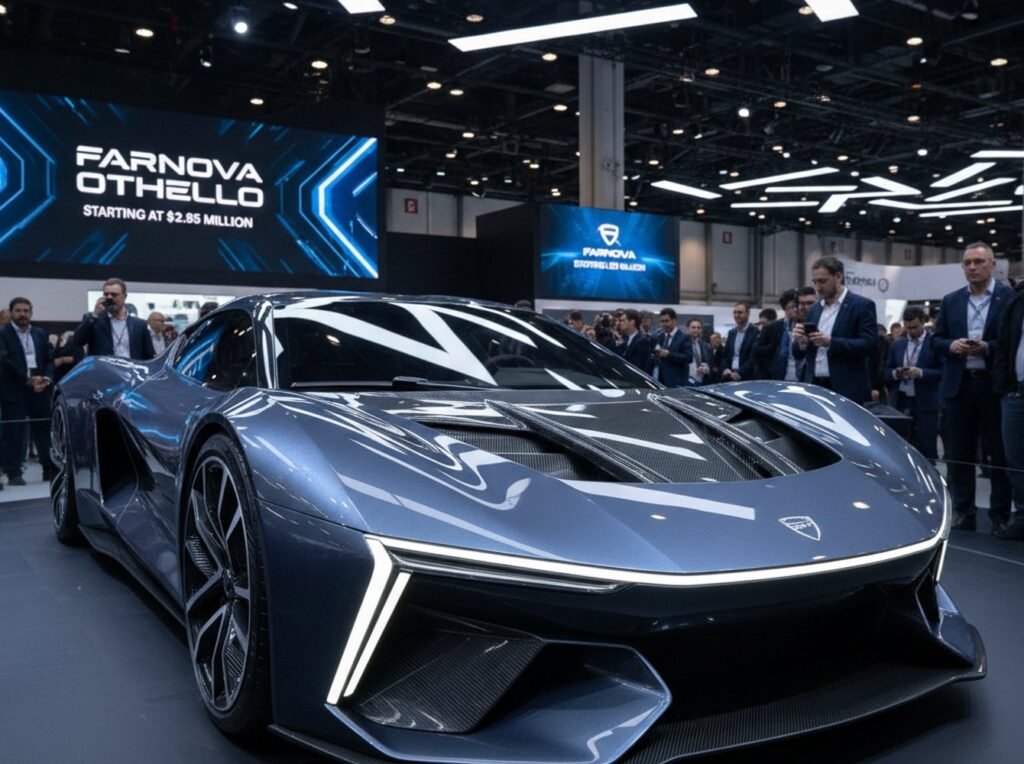
2026 Farnova Othello – Electric Hypercar Prototype (China) Unveiled: Radical Performance, Revolutionary Twin-Motor Dynamics, and the Hidden Engineering Secrets Buyers Must Know — Starting at $2.85 Million
The hypercar world has a new and formidable contender emerging from the East. The 2026 Farnova Othello – Electric Hypercar Prototype (China) has been officially unveiled, signaling a serious statement of intent from the burgeoning Chinese automotive powerhouse. This is not merely a design study; it’s a fully-electric projectile armed with staggering performance figures aimed squarely at the established European elite. Farnova Automotive is betting that raw power, advanced engineering, and an audacious design can carve out a niche in the most exclusive automotive segment on the planet.
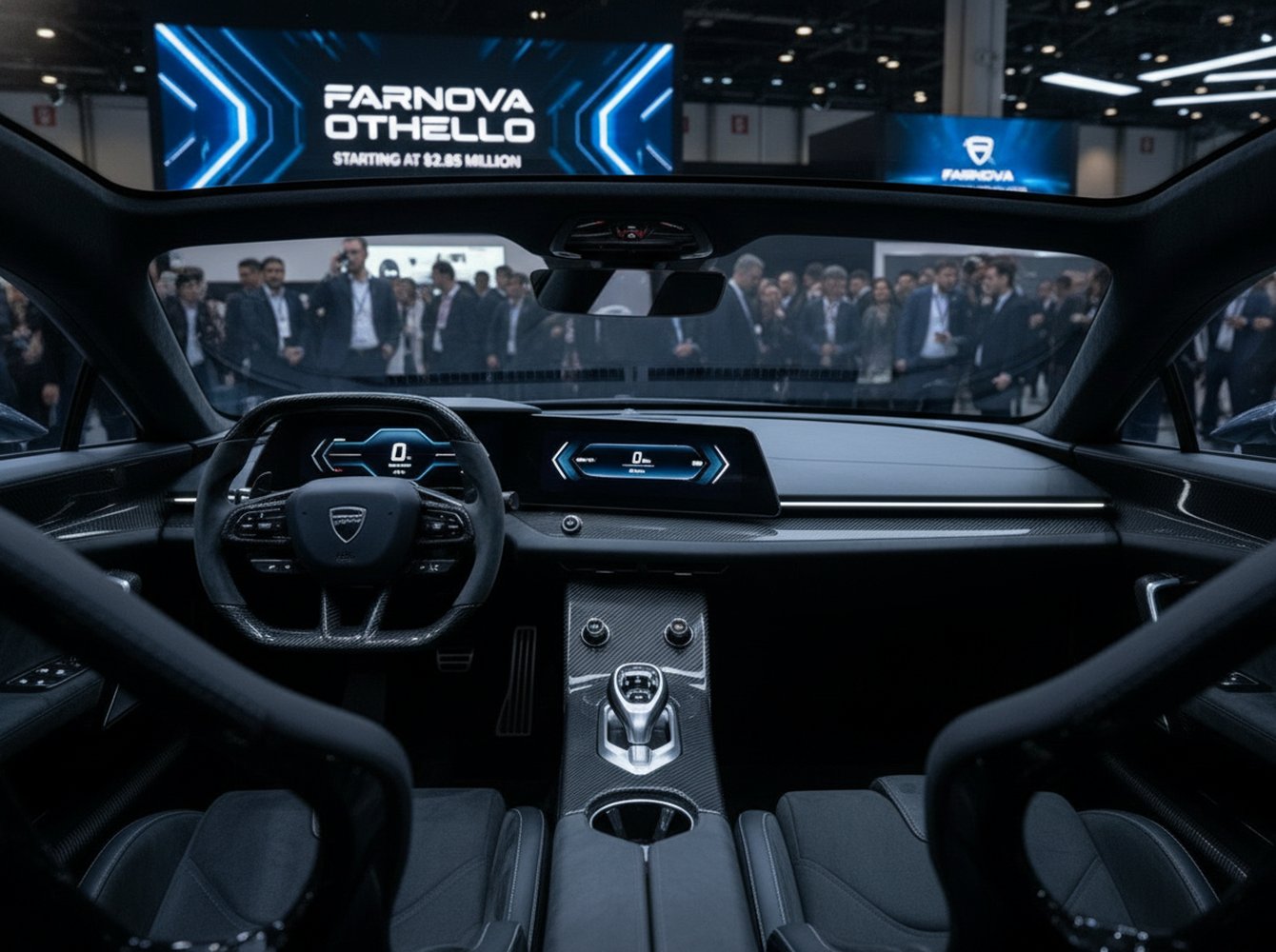
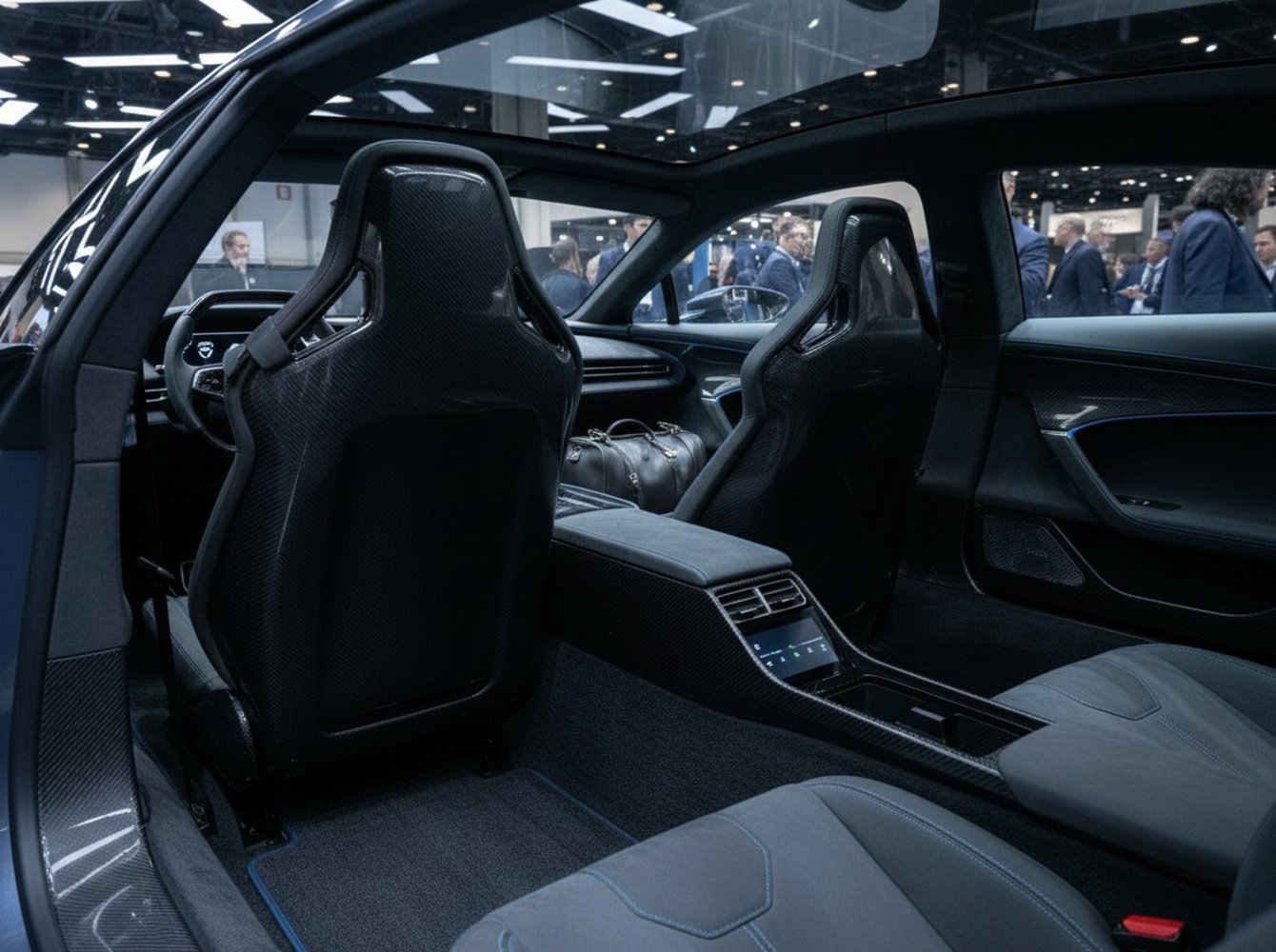
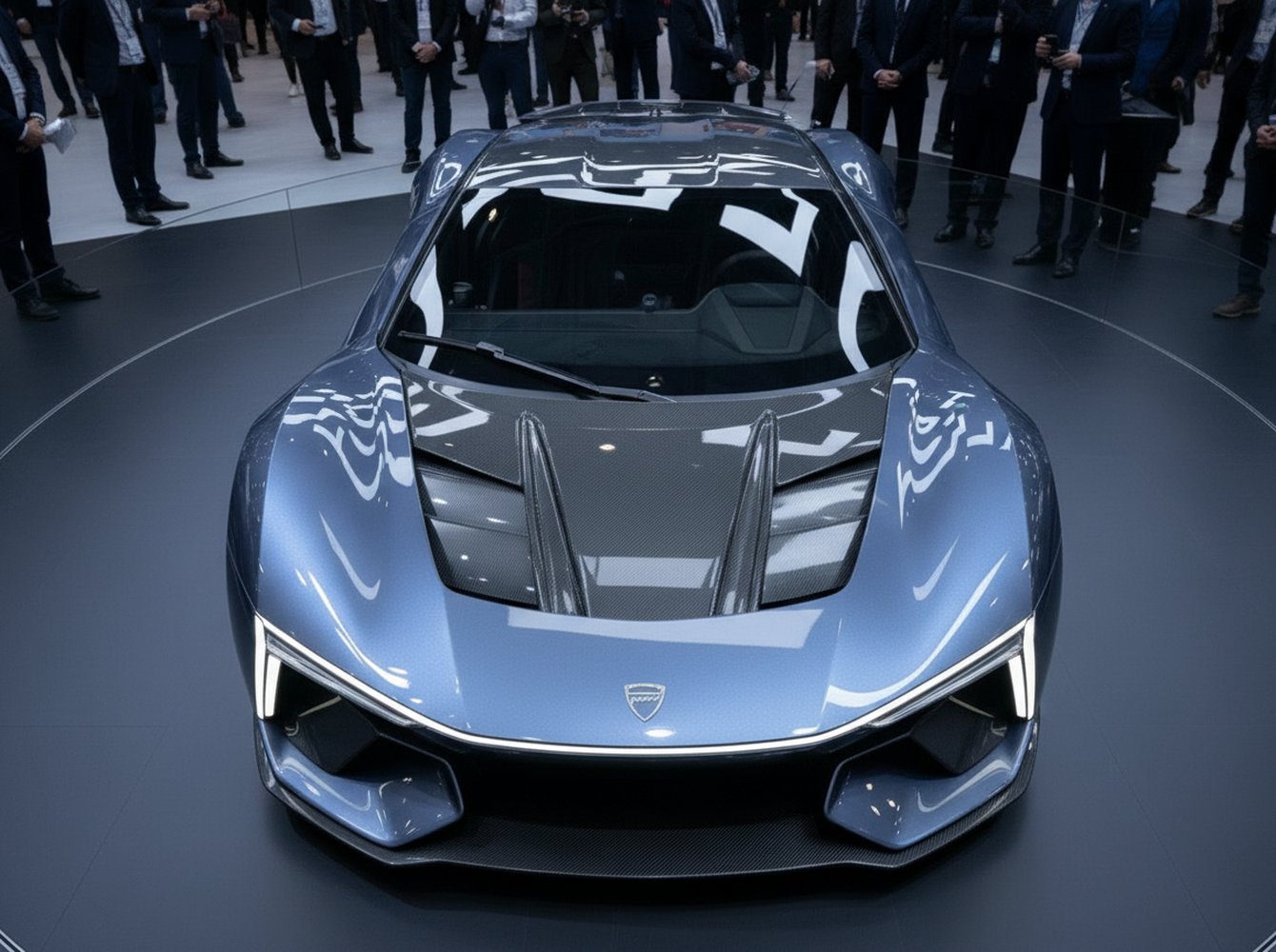
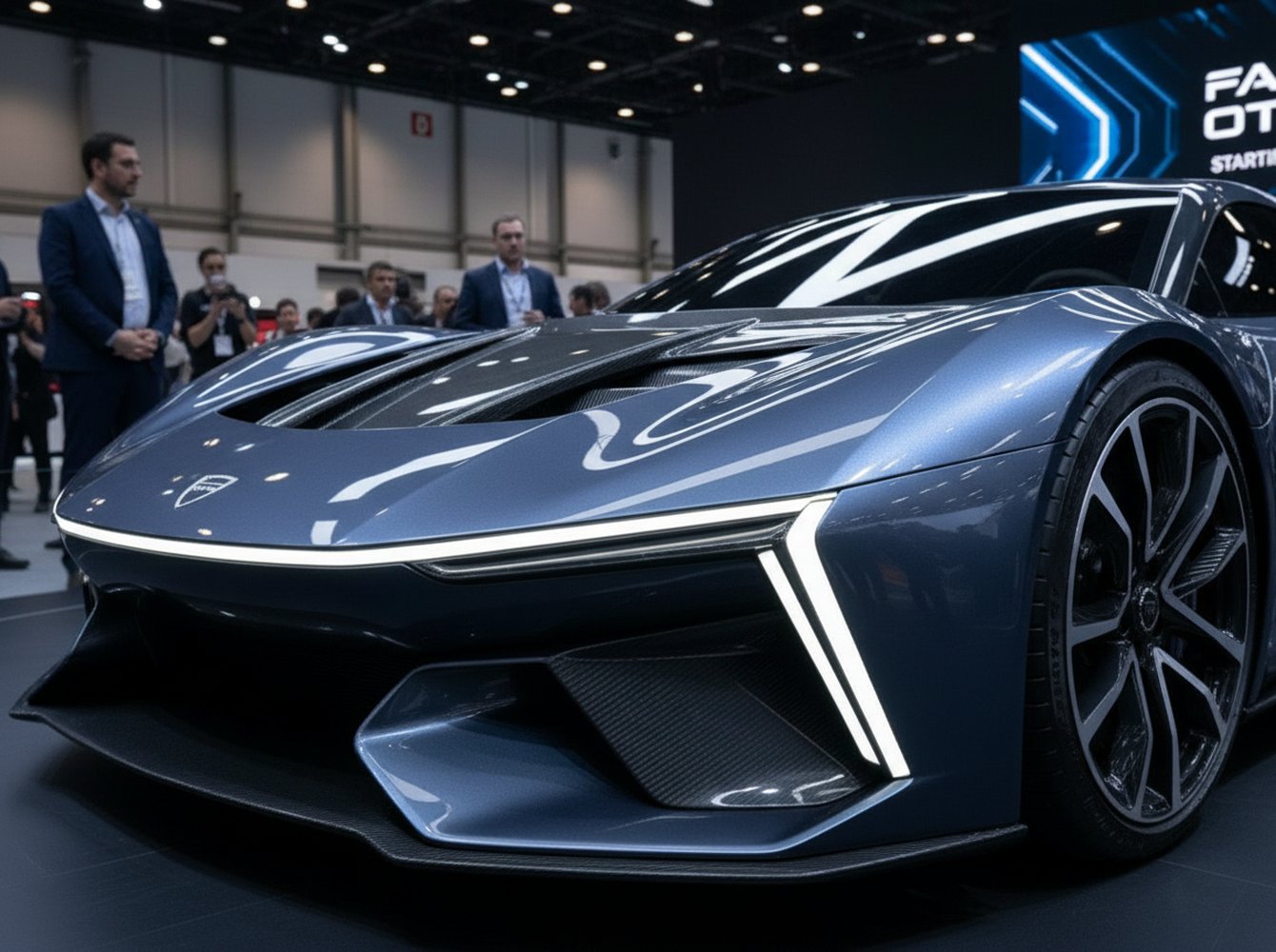
Drawing aesthetic inspiration from Italian icons, the Othello’s silhouette is both familiar and unique. Its aggressive, low-slung profile is sculpted from a full carbon fiber monocoque chassis, ensuring extreme rigidity and minimal weight. Advanced active aerodynamics are subtly integrated, with a dynamic rear wing and underbody channels that manage airflow for maximum downforce. The interior is a minimalist, driver-focused cockpit, eschewing traditional luxury for functional performance. Alcantara, exposed carbon fiber, and a pair of high-definition digital displays create an environment that feels more like a prototype racer than a road car.
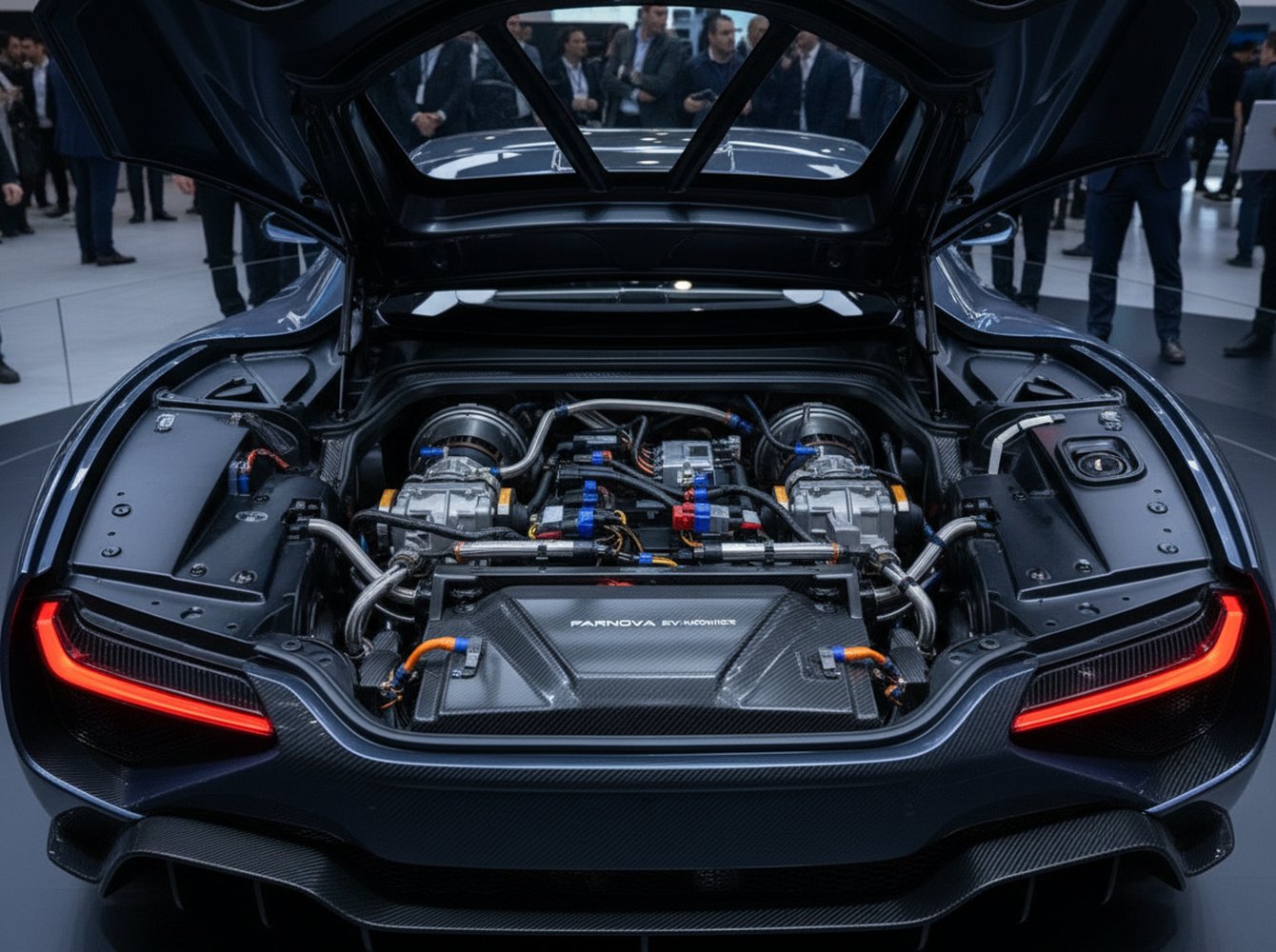
At the heart of the Farnova Othello lies a breathtaking dual-motor electric powertrain. The company claims a combined output of 1,835 horsepower and an earth-rotating 12,000 Nm (8,850 lb-ft) of wheel torque. These figures translate into a claimed 0-62 mph (0-100 km/h) time of just 1.8 seconds, with a projected top speed of 261 mph (420 km/h). Power is managed through a sophisticated torque vectoring system, while a racing-derived push-rod suspension and massive carbon-ceramic brakes are tasked with harnessing the car’s monumental performance potential.


While the Othello is unapologetically a performance machine, Farnova has incorporated essential modern technology. The cabin is designed to eliminate distraction, with critical controls mounted on the steering wheel and a primary digital instrument cluster providing key telemetry. The central infotainment screen manages secondary functions, but the focus remains on the driving experience. This is a vehicle where every component serves a purpose, prioritizing speed and driver engagement over creature comforts, a clear indicator of its track-focused DNA.
In a market dominated by names like Bugatti, Koenigsegg, and Rimac, the Farnova Othello’s primary unique selling point is its origin. It represents a bold leap for China’s automotive industry into a territory previously untouched. For U.S. buyers, it presents an exotic and intriguing alternative to the established order. Its success will hinge on whether it can deliver a driving experience and level of quality that justifies its multi-million-dollar price tag and convinces discerning collectors to invest in a new, unproven brand.
Beneath the carbon fiber skin lies a suite of cutting-edge technology. The Othello is slated to use a next-generation battery pack, reportedly developed in partnership with a leading global supplier, offering high discharge rates for sustained peak performance. The vehicle’s software and control systems are a crucial, if hidden, engineering feat, responsible for managing the immense torque and translating it into controllable acceleration. This intricate digital nervous system is what truly separates modern electric hypercars from their analog predecessors.


The on-paper specifications of the Farnova Othello are undeniably impressive, placing it in direct competition with the Rimac Nevera and Lotus Evija. However, achieving these numbers in a real-world, reliable production vehicle is a monumental challenge. While the power figures grab headlines, the true test will be in the chassis dynamics, software integration, and overall build quality. A new brand must prove its engineering prowess not just in straight-line speed but in the nuanced feel and feedback that define a true driver’s car.
The Farnova Othello is more than just a car; it’s a declaration of ambition. It proves that the electric hypercar revolution is a global phenomenon, with serious innovation emerging from new corners of the world. While the path from a dramatic prototype to a production reality is fraught with challenges, the Othello has successfully captured the attention of the automotive world. Its future development will be a critical storyline to watch in the evolving landscape of ultimate performance.


What are the official performance specifications of the Farnova Othello?
Farnova claims the Othello prototype produces 1,835 horsepower and 12,000 Nm of wheel torque from its dual-motor electric powertrain. This results in a projected 0-62 mph time of 1.8 seconds and a top speed of 261 mph.
Is the Farnova Othello street legal in the United States?
As a prototype, the vehicle shown is not yet homologated for any market. For a production version to be street legal in the U.S., it would need to undergo extensive and costly federal safety and emissions certification, a significant hurdle for any new, low-volume manufacturer.
How does its technology compare to established electric hypercars like the Rimac Nevera?
While both cars boast incredible power, the key difference lies in maturity and software integration. Rimac has spent over a decade perfecting its powertrain controls and torque vectoring systems. Farnova is newer to the scene, and its ability to deliver a similarly polished and dynamic control system will be critical to its success against such a benchmark.
Share this article
Help other drivers discover this story.